
CrossFit. Hyrox. Tough Mudder. Spartan Races.
All of these and more represent a challenge culture in the fitness space that has absolutely exploded. These aren’t just workouts — they’ve become entire movements, complete with their own communities, hashtags, and subcultures. And make no mistake: they’ve done a lot to move fitness forward. People are training hard, lifting weights, pushing limits, and celebrating physical culture has become more popular than ever.
But like most things in fitness, these challenges are a double-edged sword. They’re not all high-fives, and “we’re in this together” captions for instagram. It’s a bastion of support that also has an ugly side — one that breeds injury, obsession, elitism, and a nice dose of social media-fueled FOMO.
The Good
Camaraderie & Community
If you’ve ever seen a CrossFit box or a Tough Mudder starting line, it goes without saying the energy is contagious. People are cheering, high-fiving, carrying each other through obstacles. For many, that sense of belonging is the hook. This is what keeps them consistent.
And let’s be honest — most people aren’t exactly brimming with accountability. If it takes a mud pit and a $200 registration fee to keep you showing up, fine. Mission accomplished. Many such ones may not ever even set foot in a gym otherwise.
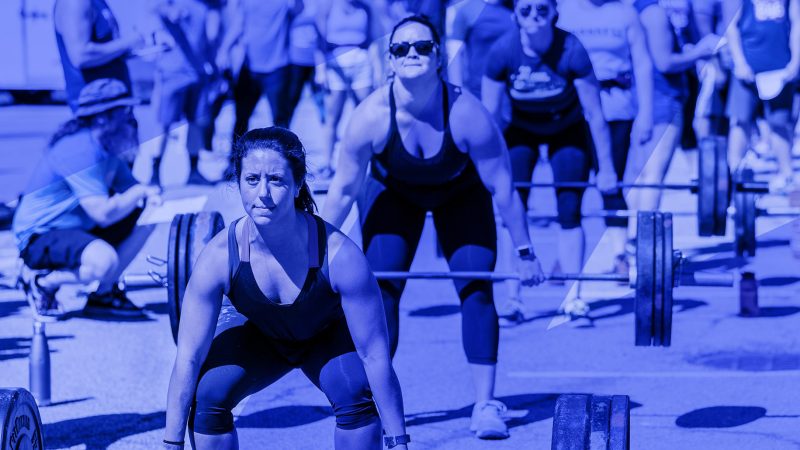
Hard Work is Cool
CrossFit made Olympic lifting mainstream.
Hyrox made sled pushes and carries feel like the Super Bowl.
Tough Mudder made running tolerable by sprinkling in barbed wire and electric shocks.
Instead of chasing “10-minute abs”, “shake weight”, or bouncing between machines, people are picking up barbells, learning new skills, and realizing sweat isn’t the enemy. That’s a cultural win.
Fitness as a Public Act
For decades, gym workouts were private. You did your sets, went home, and maybe flexed in the mirror if no one was looking. But fitness challenges flipped that. So did social media. Training is something to celebrate and broadcast.
Now, you can’t scroll Instagram without seeing someone dragging a sled or hanging off monkey bars with a caption like “this is what hard work looks like.” And hey, as trite as it may be in 2025, if that visibility inspires someone else to stop skipping leg day, have at it.
The Bad
Competition Bleed
These events are sold as “fun.” But once there’s a scoreboard, good luck convincing people it’s just for kicks.
What starts as a personal challenge can quickly turn into a leaderboard obsession. Suddenly, it’s not enough to finish — you have to beat someone, PR every time, and then post about it all to prove it happened… Or worse, to justify feelings of pride, worth, or accomplishment. That mindset pushes people to train for validation instead of health. And that’s a fast lane to burnout.
Tribalism
Yeah, I said it. You know that friend who does CrossFit? Of course you do — they told you within the first five minutes of meeting them. Same goes for Hyrox athletes or Spartan racers. Of course I’m being flippant, but the fact remains: These communities will make people talk.
And that’s great, but these tribes can get cliquish fast. At the same time it makes fitness inclusive, it becomes a badge of superiority. “Oh, you just go to the gym? Cute. I compete.” That kind of attitude doesn’t grow the industry — it just builds echo chambers.
Accessibility
Not everyone should be diving headfirst into these events. But marketing tells you that anyone can, which is how a lot of unprepared beginners end up sidelined with injuries or disillusioned when they can’t keep up. It’s like telling someone who just learned to ride a bike that the Tour de France is right around the corner. Technically true, but also insane.
As a trainer, in the 2008-2010 pocket of my career, I remember a good handful of clients who eventually stopped working with me to curiously try out the new style of training that was taking the industry by storm called CrossFit. Looking back, most of those clients were far from ready to take that on.
The Ugly
Injury Risk Under Fatigue
Simply put: Technical lifts and obstacle courses don’t mix well with exhaustion, ego, and time caps. Olympic lifts in the back half of a WOD. Hyrox stations when you’re already gassed. Obstacle jumps after 8 miles of running. It’s not hard to predict what comes next: poor form, potentially blown joints, and a long break from training you didn’t plan for.
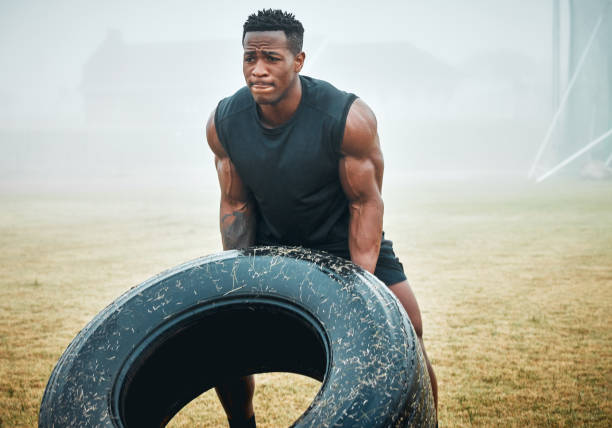
Some view this stuff as inevitable battle wounds and badges of honor to justify commitment to the movement.
It behooves us to remember that each and every one of these things were first created with an individual’s health and wellness in first mind – regardless of how much the mainstream and general public may have perverted this idea to lose the message in translation.
Thanks to these challenges, the new gold standard can be collapsing in a sweaty heap on the floor. If you’re not wrecked, did you even try?
That’s the kind of mentality that convinces average gym-goers that every session has to be a war. The kind of stuff that I and many of my colleagues do as much as we can to speak against in the name of balance. The truth? If you’re trying to actually make progress and not just win Instagram, the smartest thing you can do is train sustainably, forever. It isn’t sexy, but it works.
The Social Media Trap
Scroll through Instagram and you’ll see endless posts of medals, podium shots, finish-line smiles, and #beastmode captions. What you don’t see: the torn shoulders, the skipped family gatherings, or the person who quietly quit after burning out.
This curated reality creates a perfect storm:
FOMO: Everyone else is signing up. If you’re not, you must be lazy.
Peer Pressure: Posting about training becomes part of the event. You’re not just competing — you’re marketing it.
Comparison Culture: Times, scores, and physiques plastered online make you feel perpetually behind.
Propaganda Machine: Every post doubles as free advertising, selling you on the idea that this is the pinnacle of fitness.
So instead of training for yourself, all of a sudden you’re training for the algorithm. Fitness stops being about health and starts being about the optics. But the optics don’t make you stronger or healthier.
The Algorithm vs. the Athlete
Social media doesn’t reward smart training. It rewards clicks. That’s why the stuff that trends is the extreme, the flashy, or the downright reckless. Unfortunately, it takes a trained eye to realize this. There have been more than a few instances where a client sends me a video of an oiled, young “trainer” performing a nearly impossible circus trick in a gym involving weights, hoping for an impressed reaction from me, or some similar acknowledgement of this being “superior, next-level training”.
My actual response disappoints them every time.
Nobody’s algorithm is pushing videos of someone doing three solid sets of lunges, resting properly, and going home. What you do see is people blacking out after a WOD, screaming their way through a PR, or collapsing in the mud. That’s not by accident — it’s what the platforms feed you, because spectacle grabs attention.
The problem comes when people start believing that’s what training is supposed to look like.

If your workouts don’t resemble a highlight reel, you feel like you’re not working hard enough. But here’s the reality: Actual athletes — the ones who last — don’t train like that every day. They don’t redline themselves for content, and they definitely don’t build their programming around what looks best on camera.
The algorithm celebrates burnout. The athlete knows better. Most people in the general public are caught in the middle, contemplating working out for likes and not progress.
Where Do We Go From Here?
A lot of good has come from these movements – don’t get me wrong. They’ve brought real training into the mainstream, inspired countless people, and created communities where none existed before.
But let’s not ignore the baggage.
If you thrive on these events, great. Just don’t lose the plot. You don’t have to live by the leaderboard. You don’t have to measure your worth by medals or Instagram likes. And you don’t have to break yourself to prove you belong.
The real challenge isn’t the one with a start time, a finish line, or a price tag. It’s creating a balanced, sustainable relationship with fitness that’ll last decades — one that doesn’t depend on mud pits, hashtags, or anyone else’s approval.
If you’re able to attain that balance and be at peace with it, by all means – assemble your team, and line up to take your marks. The starter’s pistol is about to go off.


