
I find it hilarious that one of the most nominated films at the Oscars this March, demanded 3 hours and 40 minutes of its audience’s time, in an era where the Instagram algorithms will reward your reels when you get to the point in 3 seconds or less.
Let’s be honest—along with their self-worth, social media has completely ruined people’s attention spans, their perception of fitness, and their place within its culture. And in the grand scheme of things, it has also made people focus on the wrong indicators to signify “making it.”
Never has there been so much access to so many objects for comparison in one place ever before. Scroll through a news feed and you get front row seats to the most superficial and fickle landscape, specially designed for short memories and insecurity.
That diced, shrink-wrapped look you might be basing your current self-esteem on might get you a couple of fire emojis on Instagram, but in reality, Nobody cares. Not really. People just want their dopamine hit and then they scroll past you, onto the next shredded fitness model, influencer, or whatever else catches their eye in the next two seconds.
Still, millions chase an aesthetic that ultimately leads to nothing but fleeting online validation. We’ve probably all been a part of this zeitgeist in some capacity (either as a taker, or a giver), so this comes with no shade thrown. But if you’re one who relates, it’s worth pause. This ain’t about abandoning your fitness goals or hard training. it’s about rethinking the main priorities when doing so.
Social Media Has Destroyed Your Ability to Be Satisfied
Social media has turned fitness into a spectacle instead of a pursuit of strength, health, and longevity. People are chasing the most shredded look possible because they think that possibly due to viral attention, likes, and shares, it somehow also validates their fitness or even their expertise. They think it means they’ve earned respect. But in reality, that chase leads nowhere.
And that’s because nobody is ever satisfied anymore.
Let that sink in.
The moment you see one guy with an 8-pack, you’ll see another with veins running through his obliques. Then another who somehow looks even hungrier and more cartoonish. The moment you see a woman with a gluteal shelf, you’ll see another with striations in her hamstrings, and another with all of that plus a snatched waistline.
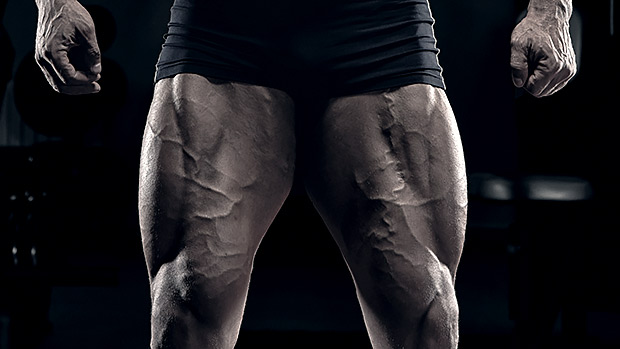
It’s a “moving goalpost” that perfectly characterizes social media for its highlight reel of genetic outliers, drug users, photoshop and AI users, and folks who possibly obsessively treat their bodies like science experiments. For that reason alone, You will never be the most shredded person in the room, and even if you were, everyone would care for about 3 seconds.
Stop Comparing Yourself to People Who Don’t Even Look Like That
Here’s the part most people forget: Even the people you compare yourself to don’t look like that in real life.
The shredded dude on your Instagram feed? He’s flexing under perfect lighting, after a pump, with a tan, in the right posture, and maybe even after a little dehydration for that extra vascularity. And don’t forget the filters, the angles, and digital touch-ups. Because you see it all the time, your brain starts to believe that’s the standard. That’s what a “fit” body should look like. And suddenly, your own body—no matter how strong, lean, or functional—never seems to be enough.
This is the trap; the lie social media sells you. And it’s exactly why so many people develop body image issues to jettison their mental health despite actually being in great shape. They’re too busy chasing something that isn’t even real.

Training for a Healthy Body Means Something Completely Different
Here’s the truth: A truly healthy body hardly has anything to do with visible abs. It’s better to make an association with longevity and things that promote it.
The people with actual longevity in training are the ones who prioritize:
- Mobility and joint health – because being strong means nothing if you’re always in pain.
- Cardiovascular fitness – because looking “fit” doesn’t mean your heart isn’t trash.
- Sustainable nutrition – because extreme diets lead to extreme crashes.
- Overall strength and function – because a lean body without capability is just an ornament.
Now, a person could have great abs and be in perfect keeping with all of the above. But many people walking around with an 8-pack complete with striations, had to sacrifice one or more of the above to get there. They’re walking a tightrope of hormonal imbalances, extreme deficits, dehydration, and constant fatigue just to maintain a look that most people don’t care about. The kicker: Talk candidly to anyone who’s that shredded and they’ll probably mention that they can’t stay that way year round, and that this version of them is in much rougher shape than meets the eye.
Nobody Will Care About Your 8-Pack in 20 Years
This is the part people really don’t want to hear.
Fast forward 10, 15, or 20 years. You think anyone will care that you had a shredded 8-pack in 2025?
They won’t.
What will matter is whether you’ve built a body that still functions well. Whether you’ve trained smart enough to avoid chronic injuries and whether you’re strong enough to move, lift, and enjoy life without limitations.
No one is going to put “had an 8-pack in his 30s” on your tombstone. And if your entire identity is wrapped up in how lean you are, you’re in for a rude awakening when your body inevitably changes.
The Takeaway
If your only goal is to get lean for Instagram clout, ask yourself what happens when that attention fades—because it always does. It’s cool to have a healthy respect for a great physique and treat it as motivation for your own training and discipline, but there’s a line. That all has to come from a place of balance and realism.
A strong, functional, and pain-free body will always be more valuable than a physique built for validation. Train for something bigger than aesthetics. Train to be strong, mobile, and resilient – physically and mentally. Add smart nutritious food choices to the mix, and you’ll probably have a body that speaks to that.
That’s the way to get fit sustainably – you know, staying fit year round as intended – without succumbing to the vacuous dopamine traps of social media.
Sustainability. Not Superficiality.
That’s the kind of fitness that actually lasts.


